- Sithty Minutes
- Posts
- SWU Update: The Coming Rotation
SWU Update: The Coming Rotation
A major shift is coming, how will the game evolve?

Andrés Alvarez
January 19, 2026
Welcome aboard, Kyber Squadron! As mentioned in the annual update episode, I wanted to use the newsletters as a way to bring more of Star Wars: Unlimited to life and have a more light-hearted conversation alongside the normal topics I tackle on the podcast. Notably, the game will be reaching an important milestone as it will enter its first rotation. For people who do not normally play trading card games, a rotation is when the cards that are allowed at a competitive level change so that older sets are no longer legal for competitive play. In Star Wars: Unlimited, this means the first three sets of cards in the game, Spark of Rebellion, Shadows of the Galaxy, and Twilight of the Republic, will no longer be used in competitive events. Similar to other trading card games, rotation will mean a few key cards will be leaving the game, but Star Wars: Unlimited will also have a major change with leaders being included in that rotation. Since the first set, leaders have set the tone of what a deck wants to do, and as a result they have an outsized influence on the game by design.
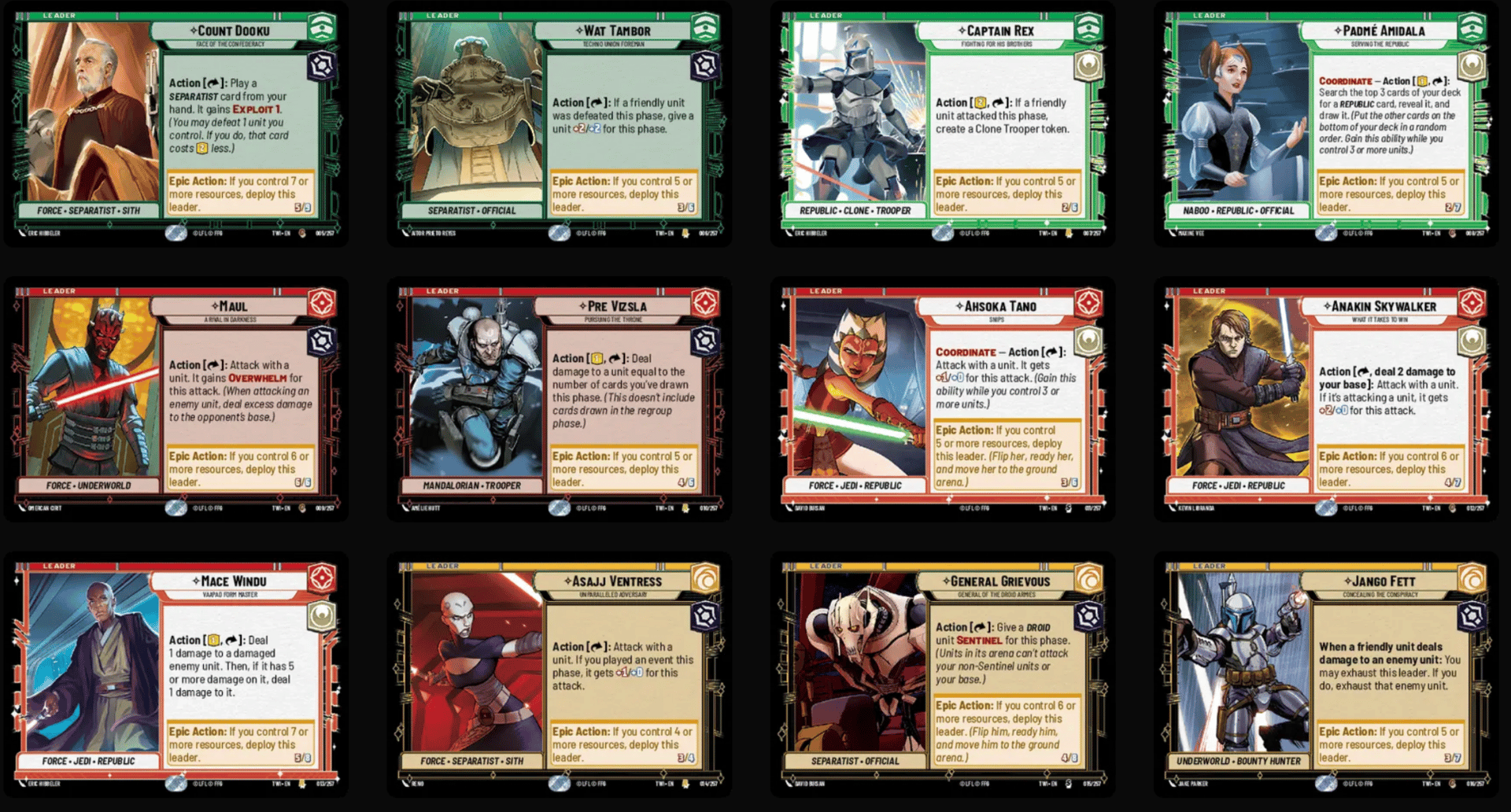
A screenshot of some of the leaders that will be rotating out
For game designers, rotation is also a way to try and adjust the power levels of the game based on how players have leveraged the existing card pool. From the outset, specific leaders have really taken over the competitive scene because of their abilities to bend the rules of the game. Key examples include the Spark of Rebellion Han Solo leader that allowed players to place an extra resource into play, essentially allowing those players to always be at least one resource above their opponent, meaning they could play larger units or play more cards each turn than their opponent and wear them down that way. Han Solo in Shadows of the Galaxy also has grown into a large threat in the overall ecosystem as he would allow players to play units cheaper in exchange for dealing two damage to them when they enter the battlefield. As more units with larger health entered the game, the damage drawback became less of a drawback, allowing strong units to come in earlier. Rounding out the top leaders in current competitive circles is Yoda from Twilight of the Republic. Yoda works by allowing a player to look at the top card of their deck, and then place one card in their hand either on the top or bottom of their deck, allowing players to get access to cards earlier, and to ensure good cards are quickly drawn back into their hand, or cards that are ineffective against an opponent can go on the bottom of a deck. Although other leaders have had flashes of inspiration or dominance, those three from the first three sets have really come into their own in the game’s first year, and their ability to consistently stay near the top of each tournament highlights how influential they have been in the game. To emphasize this point, below is the breakdown of leaders used at the most recent Sector Qualifier, an event with 342 players
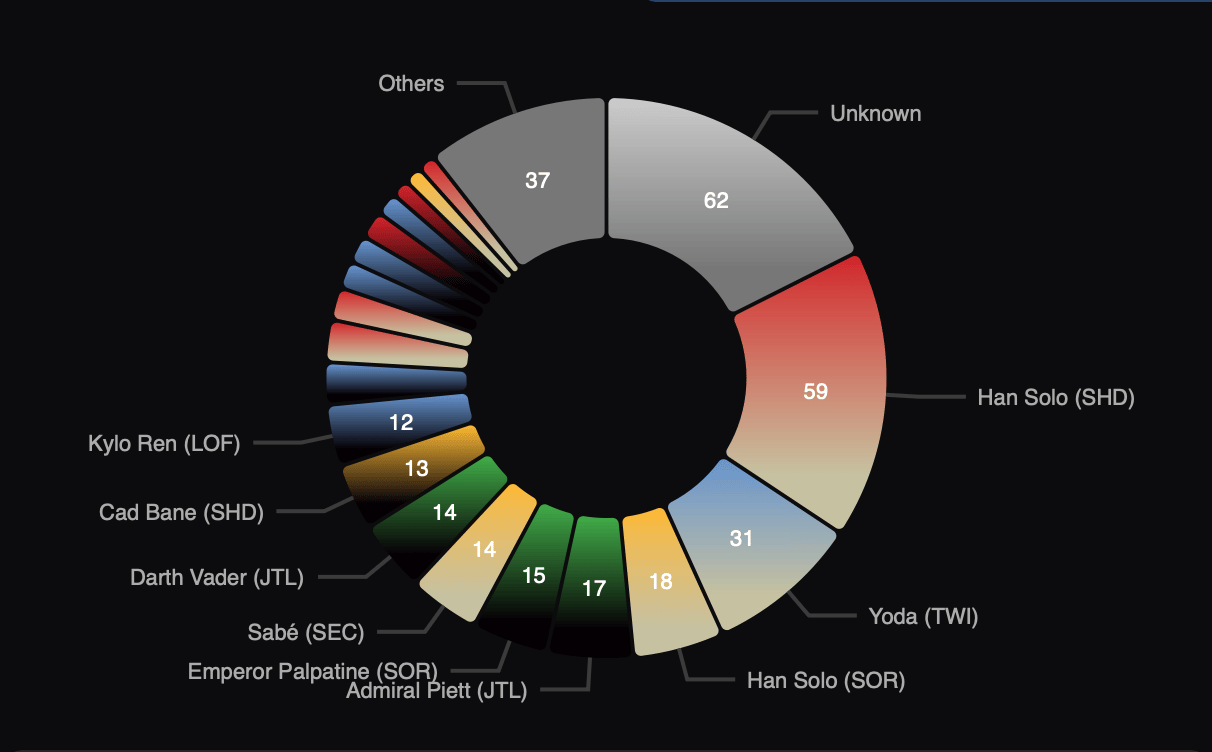
A breakdown of the decks used in Mesa, AZ (credit: SWU Base)
Rotation will come in March with the release of A Lawless Time, and losing some of these more influential leaders will definitely slow the game down a bit more. Looking at the leaders in the graphic above that will survive rotation, Admiral Piett helps to discount Capital Ships, which typically are high cost units to begin with. Sabé can look at the top two cards of her opponent’s deck, discarding one and leaving the other on top, but only after a unit deals damage to the opponent’s base. The Jump To Lightspeed (JTL) Darth Vader can generate TIE Fighters if a non-token vehicle attacked this phase. In all three of these examples, the emphasis is on play styles that come with more restrictions, and can extend games. Even leaders that can bend rules like Sabé need to do it by dealing damage to a base, which can be made difficult with something like a sentinel that forces units to attack them instead of the enemy base. As a player, this makes me excited to revisit other leaders that could put up a good fight, but were generally too slow with faster leaders out in the wild. One example is the Marshall of Starlight, Avar Kriss! Although her leader ability only allows you to generate the Force, a mechanic from an earlier set, when she is deployed she can deal 8 damage and overwhelm a defender to deal excess damage to a base even if a sentinel stands in the way. As a High Republic fan, I would love to see a leader that personifies the era in more competitive events, but we won’t know until we see the first competitive events in March and have more data to compare. In the meantime, this speculation is hype as people look for leaders that they enjoyed playing, but just couldn’t stand up to the gauntlet of objectively stronger leaders. Below you’ll see how the deck is currently structured, but I will be revisiting it when A Lawless Time is released as other cards get revealed that could have an impact on how I want the deck to work. If you’re like me and are interested in exploring Avar Kriss, feel free to use this as a template!
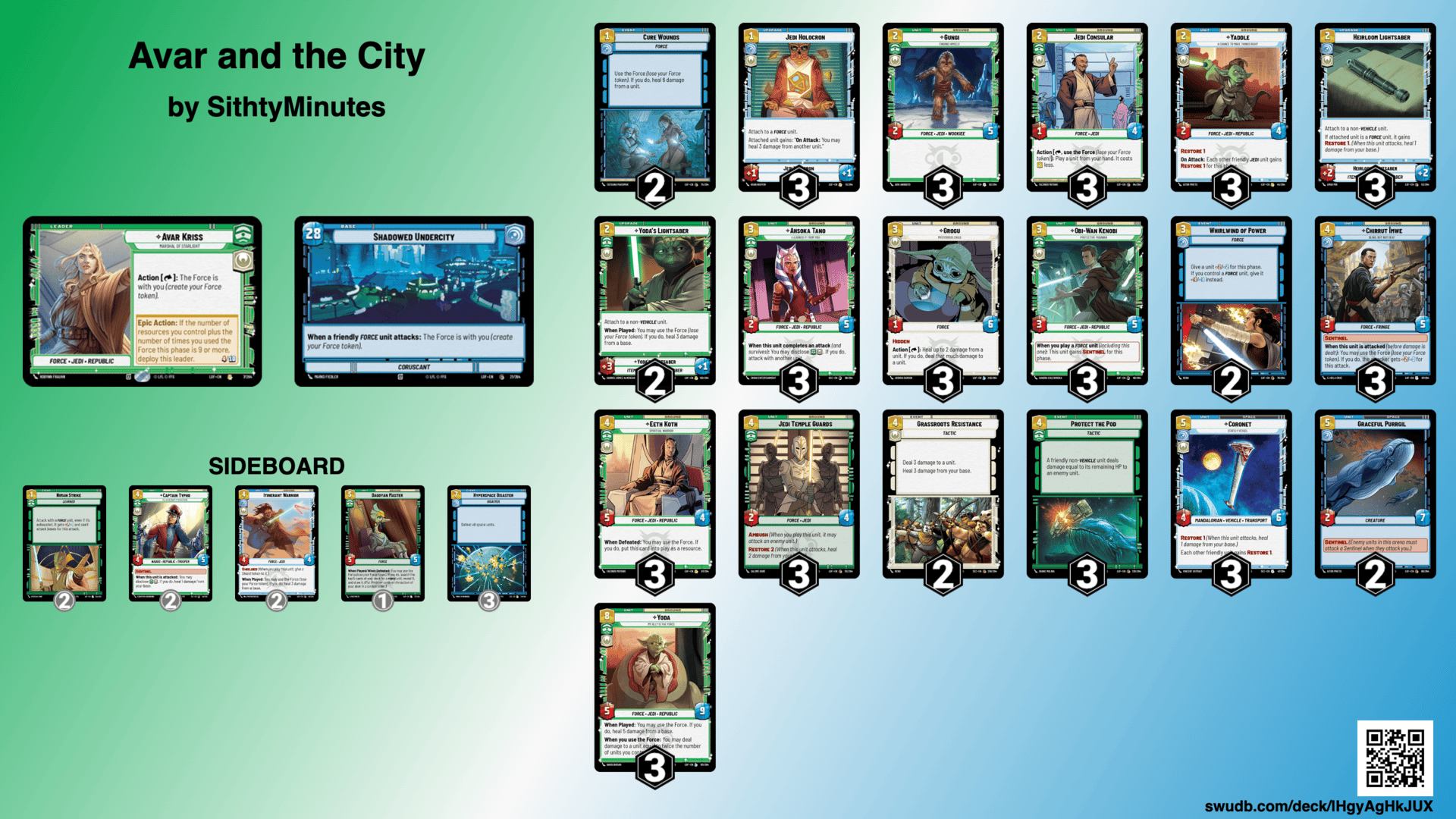
An Avar Blue Decklist Template
Next time I have a SWU update I’ll include a deck I’ve talked about on the podcast that I’ve wanted to build, and that is a politics based deck built around officials, the senate, and the laws that keep Star Wars together. Until then, may the Force be with you, from Exegol to Coruscant!